Speed is only half the measure
A typing test that reported speed alone would be easy to cheat and useless to learn from, because typing fast while making mistakes is not typing fast. Two figures matter together, and this test computes them so they cannot be traded against each other.
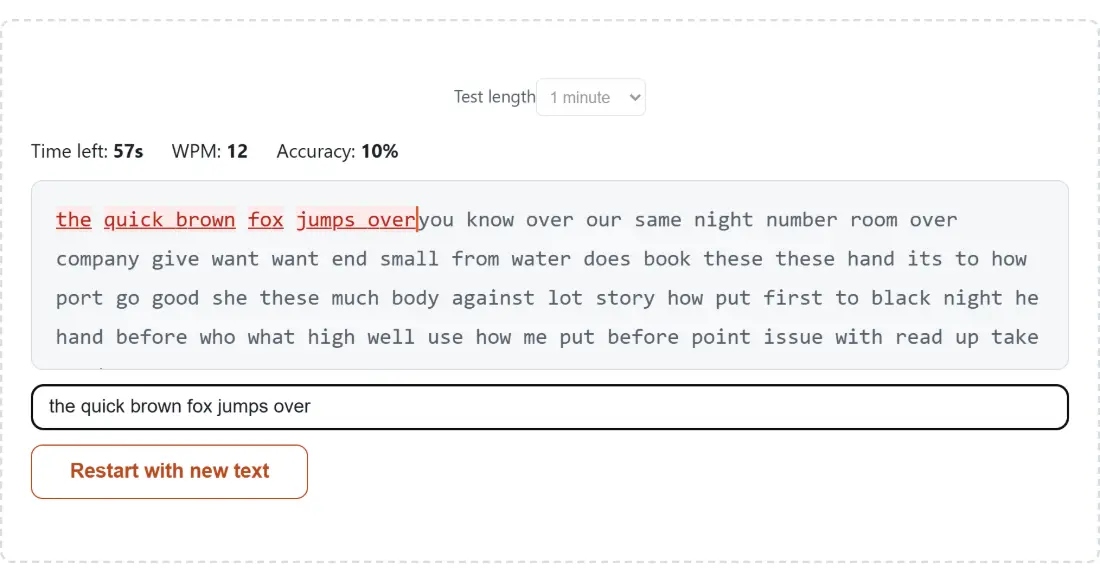
The words per minute figure counts only correct characters. Type quickly and sloppily and the speed itself falls, rather than staying high next to an embarrassing error count. The accuracy figure then tells you the shape of the problem, whether you are losing a little to occasional slips or a lot to consistently wrong reaches.
Read together they diagnose. High speed with low accuracy means slow down. Moderate speed with high accuracy means you have room to push. Low on both usually means the layout or the keyboard rather than you.
Taking a test
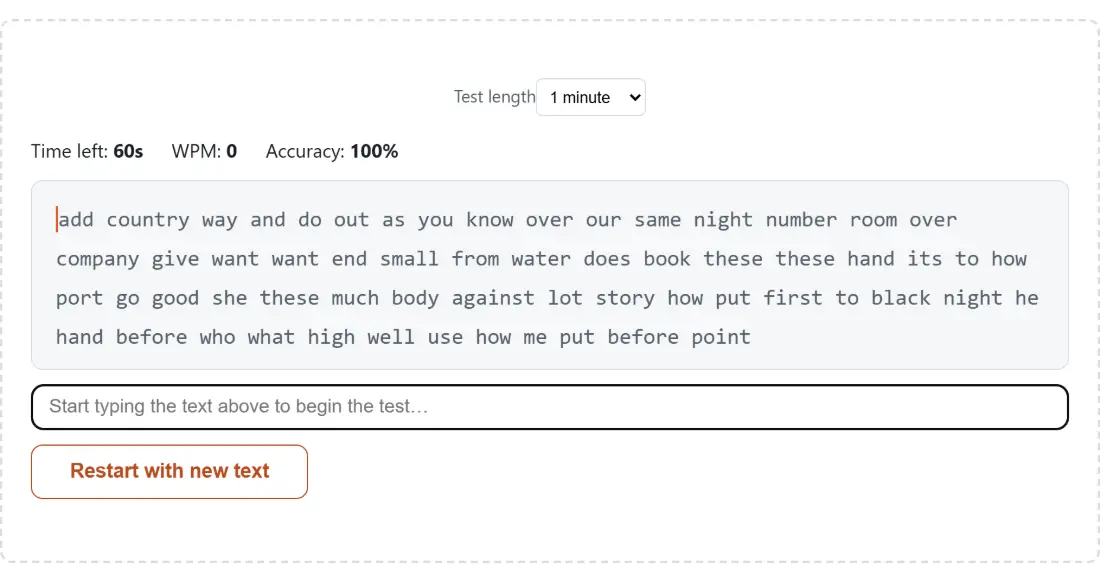
- Choose one, three or five minutes.
- Start typing the text shown. The clock begins on your first keystroke, not on a button.
- Watch the characters mark themselves correct or incorrect as you go.
- Keep going until the time runs out. The input locks and the results appear.
- Compare against the history table below, and use the restart control for a fresh passage.
Why a word is five characters
The convention looks arbitrary and is the reason typing scores mean anything at all.
If a word were an actual word, a passage of short common words would produce a much higher score than one full of long words, for identical typing. Nobody could compare two results without knowing the text. Defining a word as five characters, spaces included, removes the text from the equation entirely, so the score measures keystrokes per unit time regardless of what you were typing.
It also makes the arithmetic checkable. Two hundred and fifty correct characters in a minute is fifty words per minute, and you can verify that by hand.
The clock starts when you do
Nothing counts down until your first keystroke. That sounds minor and it removes a real source of noise, because a countdown that starts when you press a button spends its first second or two measuring you moving your hands to the keyboard rather than typing.
The text is also generated fresh each run from a word bank, with far more words than anyone will reach in five minutes. Two consequences follow. You will never run out mid test, and you cannot memorise the passage, which is the usual way people accidentally inflate their own scores over a session.
Choosing a duration honestly
Most people take the one minute test, post the number, and consider themselves measured. A one minute score is a sprint. It is a genuine measure of peak burst speed and it is not the number that describes your working day.
Three and five minute tests bring in the things that actually limit sustained typing, which are concentration and hand fatigue rather than raw finger speed. Almost everyone is slower over five minutes than over one, and the gap between the two is itself informative. A large gap suggests technique that is not sustainable, usually tension.
Because of that, the personal best is tracked separately for each duration rather than pooled into one figure. A one minute record and a five minute record are different achievements.
Related input and reflex tests
If the problem is the keyboard rather than your typing, Keyboard Tester shows every keypress as it registers and exposes a key that is failing to report. For raw reaction rather than sustained speed, Reaction Time Test and Aim Trainer measure different things, and CPS Test counts clicks rather than keystrokes.
To count words in your own writing rather than in a test passage, Word Counter does that with reading time included. The rest are on the testers hub.